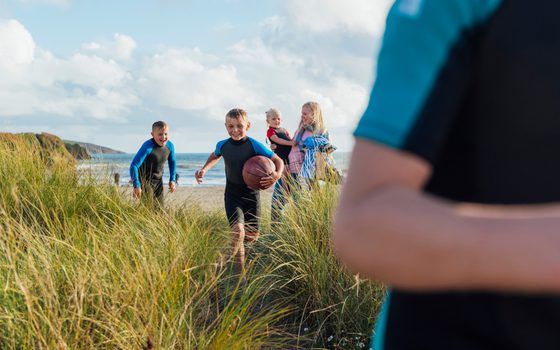
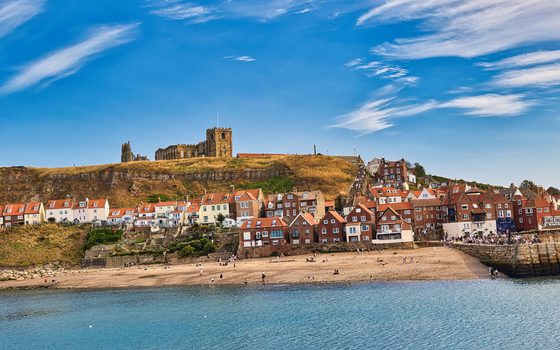
British spending on seaside staycations has dropped by 28% since 2022
Spending on domestic holidays at seaside, countryside and small-town destinations has fallen by £1.8bn over the last year alone
09 February 2026


A national decline in domestic tourism is hitting seaside, countryside and small-town destinations the hardest, according to analysis from the New Economics Foundation (NEF), out today. The numbers of nights spent on holiday there fell by just under a third (65m nights) since 2022, with spending down by a quarter (£4.6bn) over the same period. Despite 2025 being the hottest and sunniest year on record, spending at the seaside dropped by 28% when comparing with 2022.
Across the country, net spending on domestic holidays taken by UK residents has dropped by £2.6bn (8%) since 2022. The number of nights people in the UK spent on domestic holidays last year dropped by 14m (5%) and by a fifth since 2022.
The analysis follows a new report from VisitBritain that found the hospitality sector in regions outside London is heavily dependent on domestic, rather than international, tourism for revenue. Analysis from the House of Commons library also shows that the inbound tourism economy may have tipped into decline, with international tourists spending 5m fewer nights in the UK between 2023 and 2024.
In 2021, following the relaxation of Covid-19 lockdowns, the government set out its plans to embed the domestic tourism habits adopted during the previous year. But today’s analysis shows that this ambition was never achieved, creating devastating business conditions for the country’s hospitality industry.
The current government has announced a U‑turn on previous plans to increase business rates, granting pubs an exception. Heathrow airport, which flies British tourists overseas for holiday spending, was also granted £900m worth of tax cuts. But the wider hospitality industry was offered no such respite.
Researchers argue that the current business rates system is overly burdensome to struggling businesses, particularly outside the south-east, and fails to incentivise businesses to invest in their offer to punters.
Dr Alex Chapman, senior economist at the New Economics Foundation, said:
“To see such a striking decline in domestic tourism despite the hottest and sunniest year on record is grim evidence of government policy failure. Soaring costs on high streets, matched with huge tax reliefs for air travel, leads to an obvious conclusion: British households are shifting their spending to foreign high streets while ours decline. Our historic seaside destinations, already among the most deprived communities in the country, are suffering the most.
“It’s time for a policy reset. We need wholesale reform of business rates, taxing land hoarding instead of investment, and devolving power and money to local communities. We also need to stop subsidising air travel, and instead direct tax revenues to revitalising our historic destinations.
NEF is calling for a complete overhaul of the tax system to make pubs and high streets more competitive with their international counterparts. This means splitting business rates into two separate taxes: a devolved property tax which would be paid by businesses occupying a property, and a national land value tax which would be paid by the landowner.
The think tank says that this would offer relief to businesses renting properties on the high street by lowering their taxes, while taxing land ownership fairly. As well as injecting cash into struggling pubs, other high street businesses like restaurants and hotels would also benefit.
Contact
James Rush /james.rush@neweconomics.org
Notes
The New Economics Foundation is a charitable think tank. We are independent of political parties and committed to being transparent about how we are funded.
The briefing, Stopping the decline of our high streets, is available to read here.
The VisitBritain report from January 2026 titled Economic value of tourism in the United Kingdom is available here
The House of Commons Library report from August 2025 titled Tourism: statistics and policy is available here
All figures shown represent NEF analysis of the Great Britain Tourism Survey (GBTS) which is designated as ‘official statistics’ and administered by VisitBritain on behalf of the government. All analysis excludes trips and spending taken for the purpose of ‘business’ but includes all other trip categories. Spending figures are converted into 2025 prices using the ONS CPIH index. All figures are calculated as 12-month rolling totals, meaning each quarterly estimate is a sum of the quarter in question, and the three preceding quarterly totals. At the time of writing, the latest available data related to Q3 2025.
Topics Local economies