Energy security in an age of conflict
Why the UK must lead a global clean power alliance
17 July 2026


Polly Billington is the MP for East Thanet. This essay is from the collection “Rethinking the UK’s role in a fractured world”, written by a cross-party group of MPs for the New Economics Foundation.
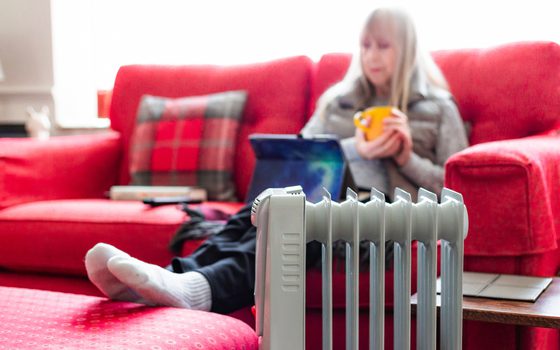
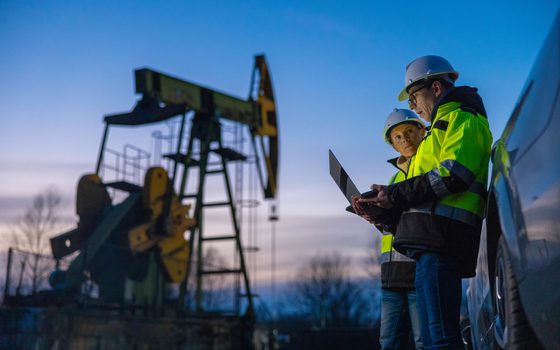
The UK may have chosen to stay out of Donald Trump’s disastrous war with Iran, but we cannot escape its consequences. The Strait of Hormuz – a narrow maritime chokepoint through which a fifth of global oil and gas passes – is once again a source of instability and economic pain. Households across the UK are bracing for another blow to their living standards, driven by our exposure to volatile fossil fuel markets over which we have little control. This is the second such shock in just five years, with half of the UK’s recessions since 1970 caused by spikes in fossil fuel prices.
But the UK is far from the only country vulnerable to the whims of global oil and gas markets and the hostile states that control them. The question is not whether the latest upheaval in the Middle East will impact countries around the world, but how quickly and how severely. Experts warn that even if the crisis in Iran is resolved swiftly, the economic consequences will play out over months and years, with many of the worst effects still to come.
For many nations – particularly net oil importers with high debt and stretched finances – oil price volatility is not simply an energy problem, but a threat to economic development and political stability. While the damage to advanced economies like ours should not be understated, the most devastating consequences will inevitably fall on the world’s poorest.
Across the global south, rising import bills drain foreign exchange reserves, weaken currencies, and force governments into politically impossible choices: subsidise fuel or fund essential services like schools, hospitals, and food security. These pressures can quickly spill over into mass demonstrations and outbreaks of political violence. High inflation does not simply create hardship; it catalyses instability that drives migration and conflict, with consequences reaching far beyond national borders.
In an interconnected world, it would be foolish for wealthy countries to turn inwards and simply look after their own. The UK’s supply chains are heavily reliant on countries like Bangladesh, Vietnam, and the Philippines. If spikes in fossil fuel prices push those economies into blackouts or recession, the consequences here will be inflation, disrupted imports, and economic instability. If the rich world tries to outbid poorer nations for dwindling fuel supplies, we risk a global race to the bottom where the poorest suffer first, but everyone suffers eventually.
Having worked first as a government advisor in the Department for Energy and Climate Change, and then as a passionate campaigner outside government for action to tackle the climate crisis, I have always believed that decarbonisation is the political cause of our age.
With growing conflict and the rise of authoritarianism and angry populism, the events of the last decade, have shown that decarbonisation is not just fundamental to tackling the climate crisis, but also for national and economic security. After all, homegrown renewables cannot be held hostage by dictators, petrostates, or erratic American presidents. The clean energy transition is no longer optional. It is fundamental to restoring global security at a time when it can feel like international events are spinning out of control.
British leadership in the energy crisis age
This moment demands leadership with the same urgency we saw during the global financial crisis in 2008. As a government advisor at the time of the crash, I witnessed the scramble to prevent systemic collapse, and I remember my own scepticism when Gordon Brown convened G20 leaders to coordinate a global response. Yet he proved the doubters wrong and used the UK’s unique position as a trusted convenor to shape international action, secure a plan, and avert a far deeper crisis.
The lesson of 2008 was clear: when a crisis is systemic, you cannot solve it alone. As soon as this ill-judged conflict began, I called for the Prime Minister to convene an International Energy Security Summit on the scale of Brown’s G20 summit. This moment demands international coordination, not only to stabilise prices in the short term, but also to accelerate the transition away from fossil fuels.
The world has made impressive progress on climate cooperation over the last 30 years, but we remain far off target, with the irrational US-led backlash against renewable energy making further progress harder still. The failure of the too-little-too-late 2009 COP summit in Copenhagen underscored the challenge of getting global agreement on decarbonisation. And the 2015 Paris Climate Accord, while a major step forward, still put the onus on states to create their own targets and work towards them individually – an ever-more insufficient framework in an increasingly unstable world. New global instability requires a new international approach that focuses on how decarbonisation can deliver energy security through resilience and supply diversity.
That is where the UK must lead. We have the credibility in bringing countries together around this global mission, as a pioneer in offshore wind deployment, carbon budgeting, and climate diplomacy. Offshore wind now provides around a fifth of our electricity, while in 2025, we became the first major economy to switch off our last coal-fired power station.
This progress is already paying dividends. Analysis by Carbon Brief suggests that in the first few weeks of the Iran crisis, record wind and solar generation saved UK consumers £1.7bn in gas imports. That is a remarkable national achievement, and one that deserves far more attention than it receives. The UK is perfectly placed to bring a global coalition together, with the run-up to our presidency of the G20 in 2027 a strong platform for us to lead from. We just need to seize the moment.
Bold action to build a world of energy security: supporting households, investing in the infrastructure of the future, and scaling up finance to the most vulnerable nations
A global summit is nothing without an action plan. What do the UK and our allies need to do to weather this crisis and emerge from it more energy secure?
Key to the UK’s G20 strategy should be reviving and strengthening the Global Clean Power Alliance as a political coalition capable of driving urgent, coordinated action. The coalition should be built around a single guiding principle: protecting vulnerable populations while rapidly reducing all of our dependence on oil and gas.
What this looks like is a plan of action that delivers targeted support to help households and communities reduce energy demand and access cleaner energy; investment in grid infrastructure and distribution to unleash the revolution in renewables and electrification; and scaled-up finance for the most vulnerable countries.
Households and communities struggle in the face of energy price shocks. Too often, governments respond with broad fuel subsidies that are costly, inefficient, and difficult to unwind. They also disproportionately benefit wealthier households that consume more fuel, as we saw with Liz Truss’s open-ended and hugely expensive 2022 universal energy bill subsidy funded by irresponsible borrowing.
A more sustainable response would be to replace universal subsidies with targeted, time-bound income support directed at those who need it most. Such short-term relief must be paired with measures to reduce oil demand, including energy-efficiency programmes, transport electrification, and investment in affordable public transport. The goal should not be to make oil cheaper, but to make alternatives more accessible. The absolute worst thing to do during a fossil fuel price crisis is to stimulate demand; this only exacerbates shortages, sends prices upwards, and does nothing to reduce our vulnerability to future shocks.
Clean cooking deserves special attention because many households in developing countries use liquefied petroleum gas (LPG) for cooking. Around 30% of LPG passes through the Strait of Hormuz, compared to a fifth of oil and gas more broadly, leaving it highly exposed to global supply disruptions. The UK should therefore lead efforts to help households switch to cleaner sources of cooking fuel, which will protect them not just from this shock but from future shocks too.
The second major focus should be on the central infrastructure challenge of the energy transition: electricity grids and flexibility. Grids are now the primary bottleneck to scaling renewables and electrification. Governments should commit to scaling up new grid construction ahead of demand, not in response to it, and maximise existing grid capacity. We also need to rapidly scale up new distribution systems, so we can reduce energy losses, improve the financial stability of utilities, and enable greater integration. The UN is pulling together all UN agencies and the World Bank to focus on grid infrastructure, but most of the UN system is not engaged in operational support; there is a need for a coalition of states to drive progress.
Help should be targeted at those countries where the impact would be highest, such as countries that are highly dependent on oil imports, have weak finances and high debt burdens, and have excess renewable generation that is being lost because of insufficient grid infrastructure.
Finally, multilateral financial institutions must also find ways to scale up support for the most vulnerable countries. Countries such as Zambia, Somalia, Pakistan, Malawi, and Nepal are trapped between two crises: they can afford neither the investment required for the clean energy transition, nor continued dependence on imported oil. They would benefit most from debt relief tied to funding the energy transition, and the use of guarantees and risk-spreading mechanisms to raise private investment in renewable infrastructure. These actions will ensure countries are supported to shift away from fossil fuels, rather than just removing subsidies.
Choosing leadership
The truth is that clean energy is no longer simply the solution to climate change. It is the foundation of economic stability, national security, and global peace. The alternative is a world in which fossil fuels continue to drive instability, conflict, and economic crises. That future is not inevitable – but it is the future we will drift into if we fail to act.
Ultimately, the current oil price shock can either deepen global vulnerability or become a turning point. A coordinated response led by the UK could reduce global exposure to future price spikes, improve economic and political stability, accelerate the deployment of renewable energy, and tackle the climate crisis all at once.
This moment demands a generational shift in how we think about energy, one that matches the urgency of the 2008 financial crash. It requires political courage, strategic clarity, and international ambition. The UK can either retreat into a defensive crouch, hoping that future crises do not strike too hard, or we can choose to lead.
We should choose leadership.
Image: iStock
Topics Environment Climate change